


Prayer & Liturgy
Prayer and Liturgy are central to the life of Carleton House Preparatory School, providing meaningful opportunities for our school community to come together in worship.
Rooted in the teachings and life of Jesus Christ, our acts of prayer and worship nurture the spiritual growth of both pupils and staff. They recognise the diverse faith journeys within our community, while remaining firmly grounded in the traditions of the Catholic Church.
As a Catholic school, our faith underpins all that we do. Through prayer and liturgy, we celebrate God’s presence in our daily lives — offering praise, thanksgiving and reflection as part of our response to His call.
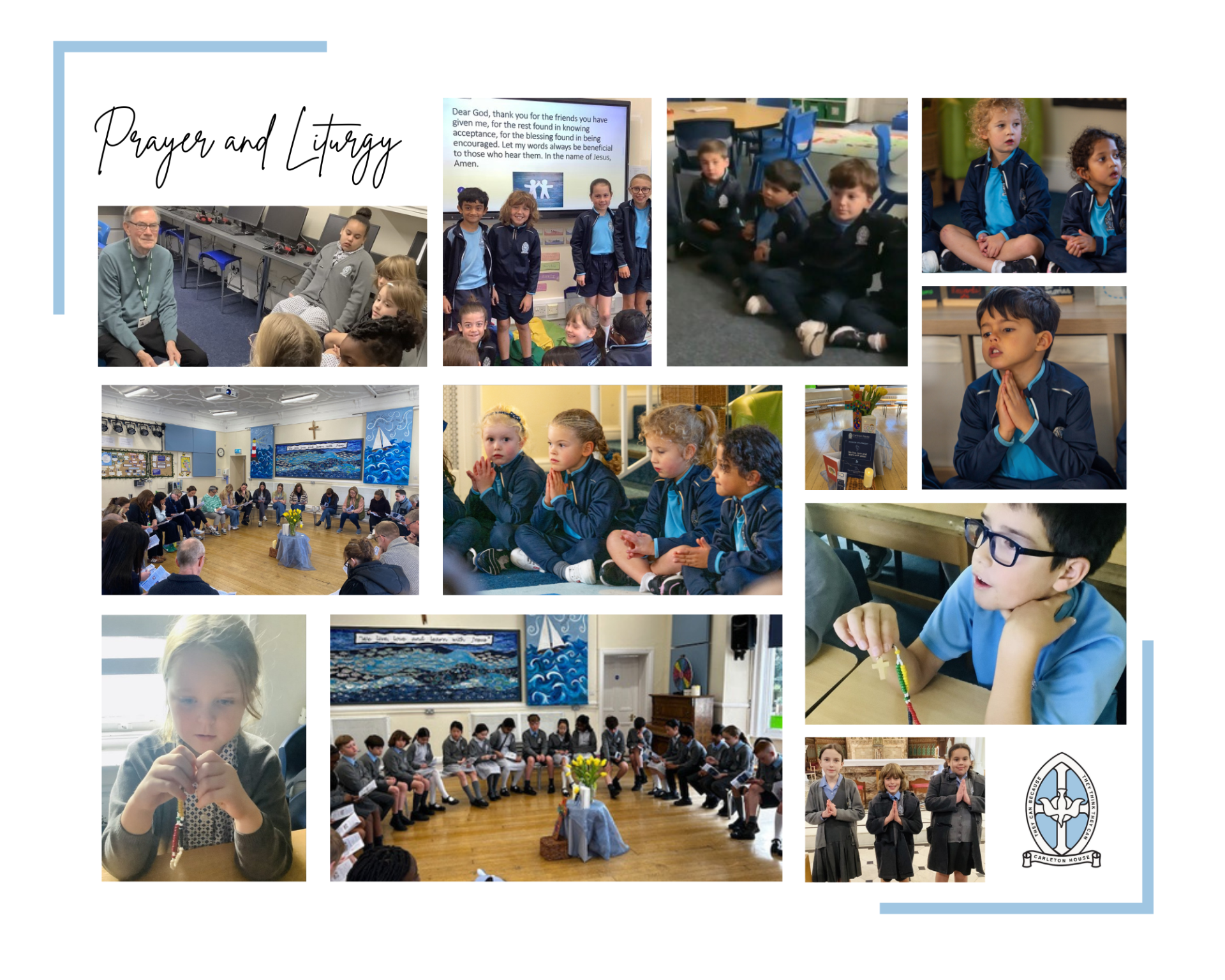
A Living Prayer Life
Prayer is part of the daily rhythm of school life.
Pupils experience:
- Daily classroom prayer and reflection
- Whole-school and key stage Prayer and Liturgy
- Opportunities for quiet reflection and personal prayer
Through these experiences, pupils develop confidence in prayer and a growing understanding of its importance in their lives.
Our approach is supported by the To Know You More Clearly and Come and See programmes, which provide rich opportunities for pupils to engage in prayer, reflection and worship.
Aims of Prayer and Liturgy
At Carleton House, we aim to:
- Enable pupils to participate actively and meaningfully in prayer and worship
- Support pupils in developing a personal relationship with God
- Encourage reflection on faith, values and moral choices
- Foster reverence for Catholic traditions
- Strengthen links between school, home and parish
- Create a strong sense of belonging within a faith community
Objectives of Prayer and Liturgy
To achieve these aims, we:
- Provide daily opportunities for prayer and reflection
- Follow a clear and consistent structure for worship
- Use a range of prayer styles and experiences
- Mark key moments in the liturgical year
- Support pupils in planning and leading worship
- Maintain a prayerful environment in every classroom
Organisation of Prayer and Liturgy
Prayer and Liturgy are carefully planned and led by the Headteacher, Senior Leadership Team and staff, with support from Governors.
Worship takes place in a range of forms:
- Key Stage Prayer and Liturgy – Led weekly by the Headteacher or staff
- Classroom Prayer and Liturgy – Led by teachers and increasingly by pupils
- Special Celebrations – Marking liturgical seasons, feast days and important events in school life
This structure ensures that all pupils experience a consistent and meaningful approach to worship.
Pupil Participation and Leadership
Pupils play an active role in Prayer and Liturgy.
They are encouraged to:
- Lead prayers and reflections
- Contribute to the planning of worship
- Share ideas and responses
- Take responsibility within collective worship
Through these opportunities, pupils develop confidence, independence and a deeper understanding of their faith.
Resources for Prayer and Liturgy
Prayer and Liturgy are supported through a range of carefully selected resources, including:
- Liturgical cloths reflecting the Church year
- Scripture and prayer books
- Religious artefacts and symbols
- Candles, music and visual displays
These resources help to create a calm, reflective and prayerful environment within classrooms and shared spaces.
A Structured Approach to Worship
All acts of Prayer and Liturgy follow a clear and consistent structure:
- Gather – Coming together in prayer
- Listen – Engaging with Scripture or teachings
- Respond – Reflecting through prayer, song or discussion
- Go Forth – Taking faith into daily life
A Rich and Varied Experience
Prayer and Liturgy at Carleton House take many forms — from quiet reflection to joyful celebration.
Worship may include:
- Music and singing
- Scripture and storytelling
- Creative expression through drama or art
- Opportunities for personal reflection
These varied experiences ensure that all pupils can engage meaningfully and develop spiritually.
Growing in Faith
Through Prayer and Liturgy, pupils are supported to grow in faith, deepen their understanding and develop a lasting connection with God.
They are encouraged to recognise God’s presence in their daily lives and to respond through their actions, choices and relationships.
This approach supports pupils in understanding the purpose and flow of worship, while enabling meaningful participation.